

Some People You Never Forget
Sometimes profound moments come out of the mundanity of nowhere

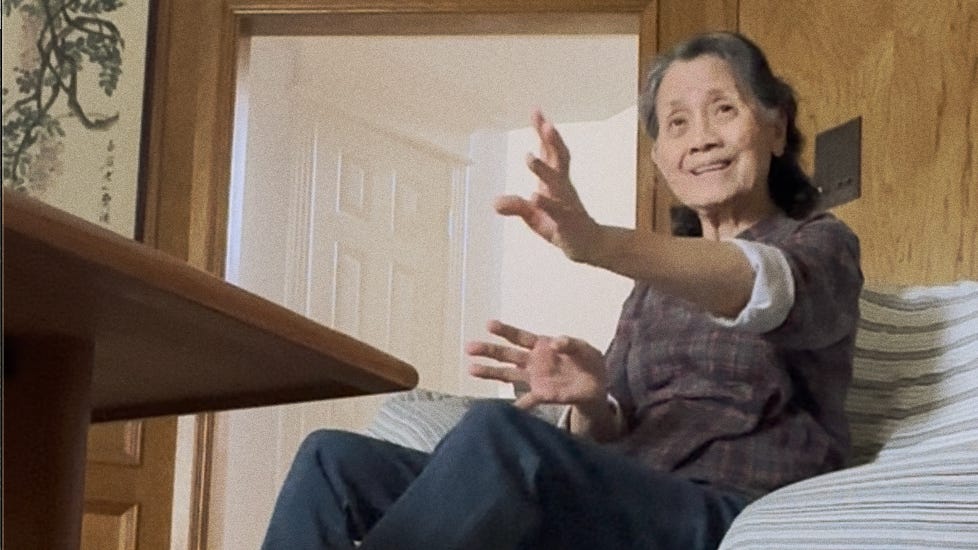
We were sitting at the dining table Wednesday evening. I had just finished making dinner for my mom and me. Salmon marinated with a MacGuyer-ed concoction of Kewpie mayo, garlic, sriracha and soy sauce that I scrounged and found in my mom’s kitchen. Congee with chicken broth. Steamed broccoli. I overcooked the salmon per usual.
I was hungrily scarfing down the tough salmon shredded over my congee. The bowl I had made for my mom was sitting in front of her, untouched. She was in the midst of telling me an old story about her childhood growing up in Keelung, Taiwan.
Each time I visit her, a good portion of our conversations revolve around the retelling of these old stories. And I attentively listen every time, like I’m watching the rerun episode of a favorite show I had seen a hundred times before and never get sick of.
I feel like she already had this tendency to repeatedly retell old stories even before the dementia. When the aperture of her outer life began to shrink, old stories were really the only line of interest she could offer to connect to others. That and dodgy health advice from the endless stream of questionable YouTube videos she gets served.
Tonight, she was sharing again about her childhood while living in a Japanese-style home built on the side of a mountain in Keelung near the ocean. This house was built raised above the earth to stay cool in the summers – a distinctly Japanese architectural design. She lived there with her four brothers, half a dozen uncles and an aunt who were roughly the same age as her and her siblings, and a family of five white dogs. My grandfather adopted his own siblings and cared for them as his children because my great-grandfather was too poor to raise them himself.
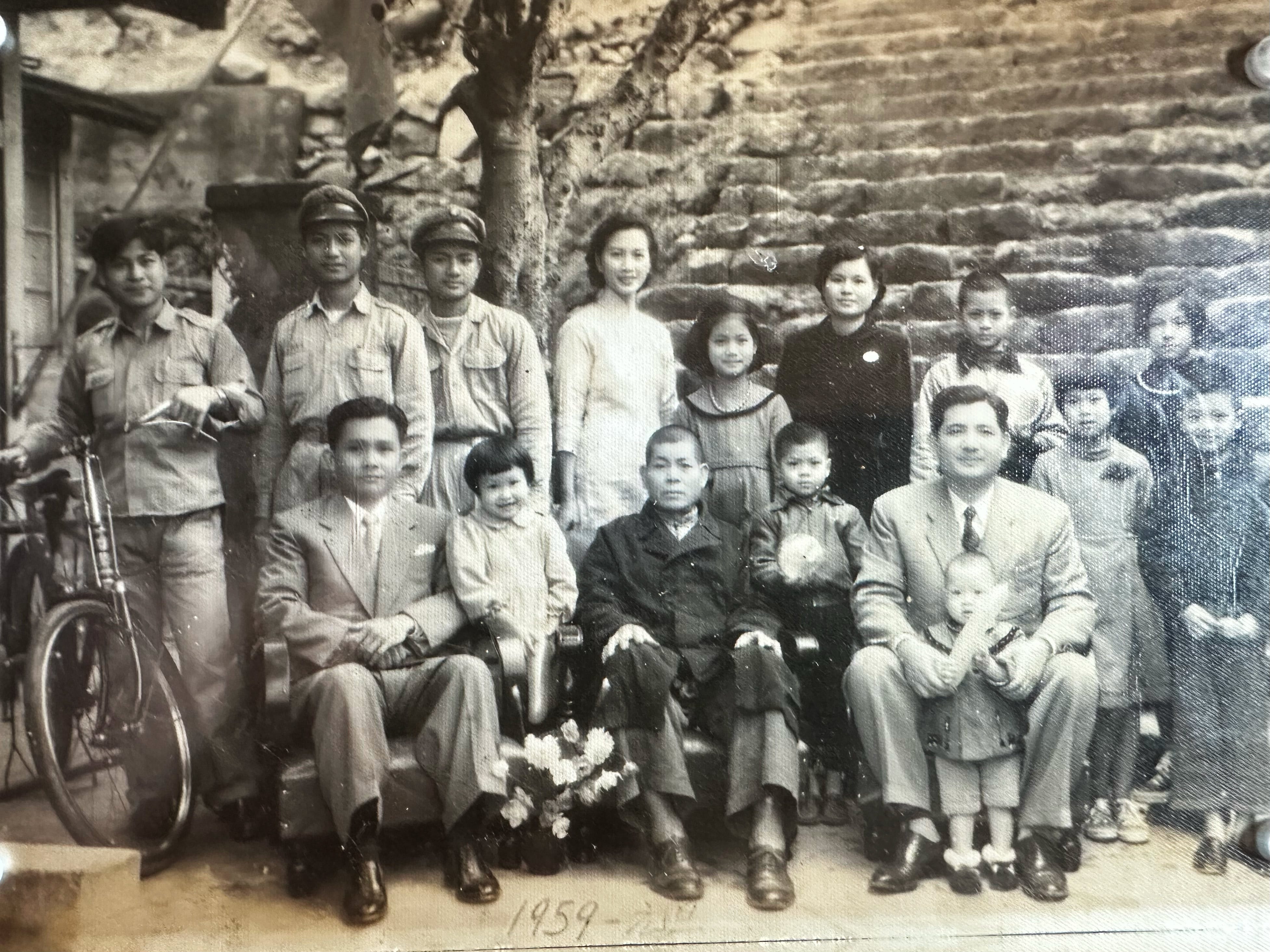
My great-grandfather was a farmer by trade who settled in the agricultural hub of Tainan, Taiwan. He also was musically gifted, which I believe is where my mom got her musical talent, leading her to pursue piano studies in Osaka, Japan and later at San Diego State University. My great-grandfather used to both compose and also make his own musical instruments from gourds grown on his farm. To my knowledge (and great sadness), nothing was preserved or kept.
I watched my mom’s face as she traveled back in time, recalling how they used to have to walk to school through puddles in the rainy Keelung weather, arriving at school with their pants fully drenched all the way up to their knees, too soaked to dry completely. Her brows furrowed with pity at her younger self and brothers having to endure such discomfort when they were little.
Hǎo kělián. (好可怜) How pitiful.
I could see her maternal overprotectiveness straining to reach back to the 1950s with a giant umbrella and rain boots.
I gently nudged her to eat her dinner as it was getting cold. She shook her head, insisting she wasn’t hungry yet. This has been a recurring theme with her dementia – her stubborn refusal to eat at mealtimes unless we are at a restaurant, and then only because it was the sole reason we were there. Each mealtime, I nudge her three or four times before surrendering the battle.
On this visit, I was noticing that my mom’s long term memory was now beginning to show signs of loss. On the second day, during another conversation of old stories, she asked me if my paternal grandparents had stayed upstairs in her house. I frowned and shook my head.
“No, they stayed in the room you and Dad made for them downstairs, the one you’re living in now. You even put in a vent for Ye-ye’s smoking. Remember?”
She got quiet as she tried hard to remember.
“How come I have this impression that the living room was upstairs? Oh, was that the house in La Jolla? I’m getting them mixed up.”
She had been remembering the home that she and my dad had lived in right after they were married in La Jolla, a year before I was born. She was having more confusion around timelines and locations, as if someone had chopped up her life into a bunch of scenes, reassembled them out of order, and also swapped elements in each scene.
She couldn’t remember when we had moved into the house she currently lived in, the one in which we had moved when I was eight. But she could remember how she used to park her car a block away from my elementary school and walk over to pick me up when the pick-up line was too long.
She couldn’t remember how old I was when we lived in the house prior to the one we were in, or when we moved there from New Jersey. But she remembered that we lived through Hurricane Diana (1984) in that house, and how intense and frightening it had been.
This was a noticeable downshift in her memory from the last trip home, just six weeks prior. I wondered quietly where it will be on my next visit.
Somehow that night our conversation wound up on the subject of autism. I told her about the Telepathy Tapes podcast I had listened to, and that some nonverbal autistic children have claimed to be able to connect to other autistics across the world through their minds. My mom was stunned.
“What a world,” she said.
Then my mom told me another story. This one was new. I had never heard it before, which shocked me as I had only been hearing old familiar stories for as long as I can remember.
My mom has been playing piano for her church’s Sunday worship service for almost five decades now. This is the Chinese church that raised me. Even though I no longer consider myself a Christian, I still consider this church my second home, and the families that knew me as a young person, my extended family.
She shared that about 15 or 20 years ago, there was an autistic boy that attended her church. He was around seven or eight years old. Whenever my mom was assigned to play piano for service on Sunday, she would arrive an hour early around eight o’clock to practice.
She told me that this little boy would always quietly walk up to the first pew next to the piano, sit and listen to her practice. They rarely exchanged words as she was focused on practicing. He would just quietly sit there and listen. She said the music must have calmed his spirit.
Years later, the little boy died. She couldn’t remember how old he was, but he didn’t live much longer beyond that time. She reflected that she wished she had talked to his parents before they stopped coming to the church. She grew quiet with emotion.
“I always felt it was such an honor to play for that boy.”
Her voice broke. She looked up at me with a wistful, pained smile, her eyes red with tears.
“Some people you never forget.”
Even now as I am remembering this conversation, I’m feeling the emotion rising within me as I think about the impact this little boy made on my mom in his short life. She didn’t know his name, but she felt his heart and his presence. And through sharing her story, I am feeling it, too.
As her memory is slowly being erased, leaving gaping holes in familiar lived and told storylines, my mom in this moment was remembering how deeply this autistic boy touched her. I thought about the irony in her words, in remembering someone she only knew as a church acquaintance, while she was simultaneously forgetting faces of beloved family members and the facts surrounding milestones in her own life.
She was remembering presence.
She was remembering a connection that goes deeper than words.
My mom has battled performance anxiety her entire life, often complaining she gets stage fright even before playing for worship service. I always found that interesting as she had played for church so often that I figured the constant exposure would have numbed the fear.
But this kind of fear is deeply rooted in her subconscious, and likely spans generations back through our lineage. Both my brother and I inherited this fear of being seen imperfectly.
This autistic boy offered her his presence as she played. And instead of experiencing fear, she was humbled. She felt honored that she could play for him, that her gift of music could offer solace. His presence was an antidote to her fear, reminding her of the purpose of creative expression – joy, peace, connection.
I find this so beautifully remarkable.
It will be another eight weeks before I will be able to spend time with her in her space again. My brother and I are talking about the next steps for her care, making plans to begin the process of getting her used to living with him and his family in their home.
While she will be able to be around family who can care for her, I also know this move will come at the cost of her easeful flow within a familiar space that she has spent the last 40 years of life. And with the loss of familiarity, I’m sure her memory will take a nosedive. I’m still weighing the pros and cons of this decision.
What this moment showed me was that there are still unexpected surprises that can come from someone with dementia. I have to leave ample room for those moments to happen. Room that can only come from curiosity.
I think this might be the hardest thing to hold onto for caretakers of loved ones with dementia. The repetition of questions is exhausting. The mundane routines feel creatively stifling. But if we can stay curious and keep wondering about our loved one – who they are in this moment of memory loss and what they can teach us as we witness them on this challenging unfamiliar road…
…I think we just might be surprised at what they continue to reveal to us.
For me, it’s all about the stories. I’m going to keep asking for them from my mom as long as she can share them. They are treasures in a mine that is actively collapsing.
To me, they are worth more than anything bequeathed in a will.